Español
A professional rotary hammer is a power tool designed to drill and break hard materials such as concrete, brick, and stone through a combination of rotation and percussive impact. The tool generates repeated axial blows while the bit turns, allowing it to penetrate dense surfaces that standard drills cannot manage efficiently. This dual action defines the category and separates it from ordinary rotary drills.
Core Operating Principle
Inside the tool, an electric motor drives both a rotational spindle and a hammering mechanism. The motor turns a crank or swash-plate system that moves a piston back and forth. The piston compresses air in a cylinder; the compressed air then drives a striker against the end of the tool bit. Each impact transfers energy directly into the material. At the same time the spindle rotates the bit so that the cutting edges shear away the fractured material.
The frequency of blows typically ranges from several hundred to several thousand impacts per minute, depending on the model and selected mode. Impact energy is measured in joules and determines how effectively the tool fractures the work surface. Rotation speed is matched to the bit diameter and the material hardness so that the cutting edges remain effective between blows.
Key Internal Components
The motor supplies power to a gear train that splits the drive between rotation and the hammering assembly. A clutch protects the gears if the bit binds. The hammer mechanism itself consists of a piston, a striker, and a set of seals that maintain the air cushion. Bearings and lubrication channels keep the moving parts aligned under repeated high loads.
The chuck system holds the bit securely while allowing the axial movement required for hammering. SDS-plus and SDS-max shanks are the common interfaces; their grooves lock into matching balls or keys inside the chuck so the bit cannot slip under impact. The housing channels cooling air across the motor and gearbox to manage heat generated during continuous operation.
Operating Modes Available
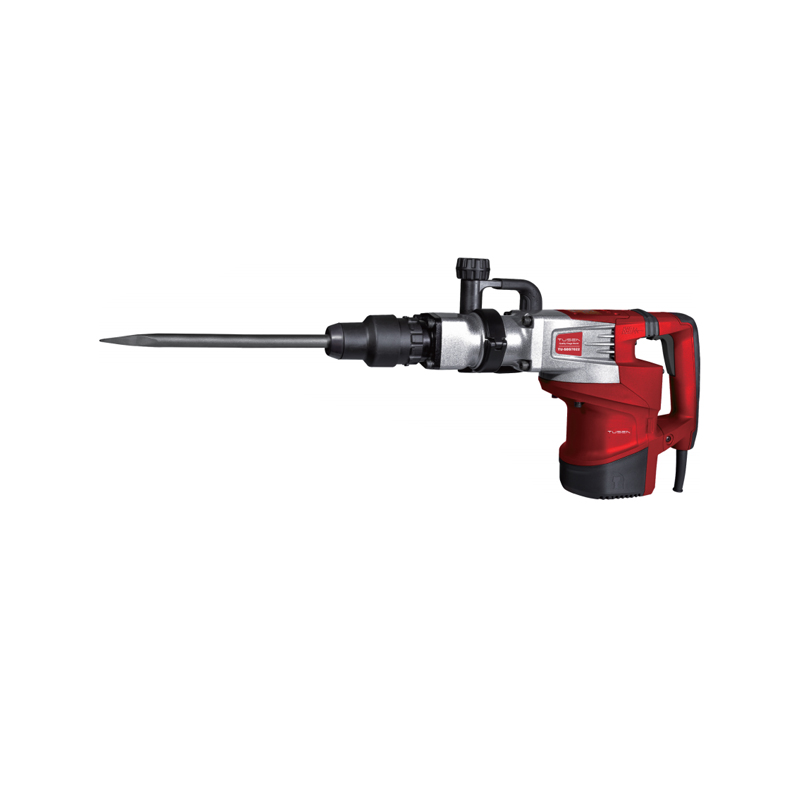
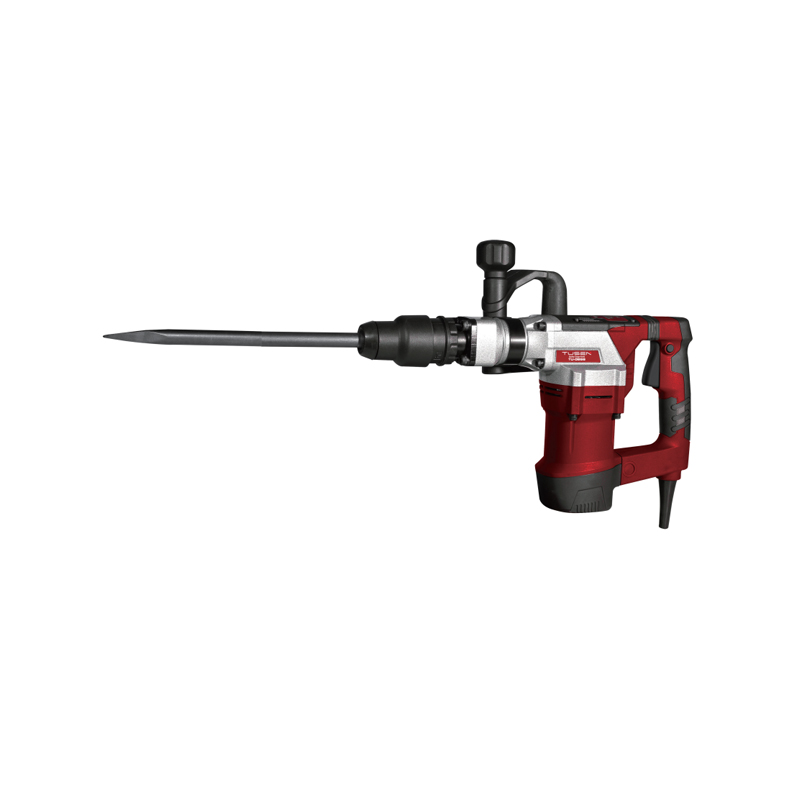
Most professional rotary hammers offer three selectable modes. The first is rotary-only drilling, used for lighter materials or when impact is unnecessary. The second combines rotation with hammering and is the standard setting for drilling into concrete and masonry. The third disables rotation and delivers pure impact, turning the tool into a light chipping hammer for light demolition or surface removal.
Mode selection is usually controlled by a collar or switch near the chuck. Changing modes alters the engagement of the hammer mechanism and, in some designs, the gear ratios. The operator can therefore match the tool’s action to the task without changing equipment.
Power Delivery and Performance Characteristics
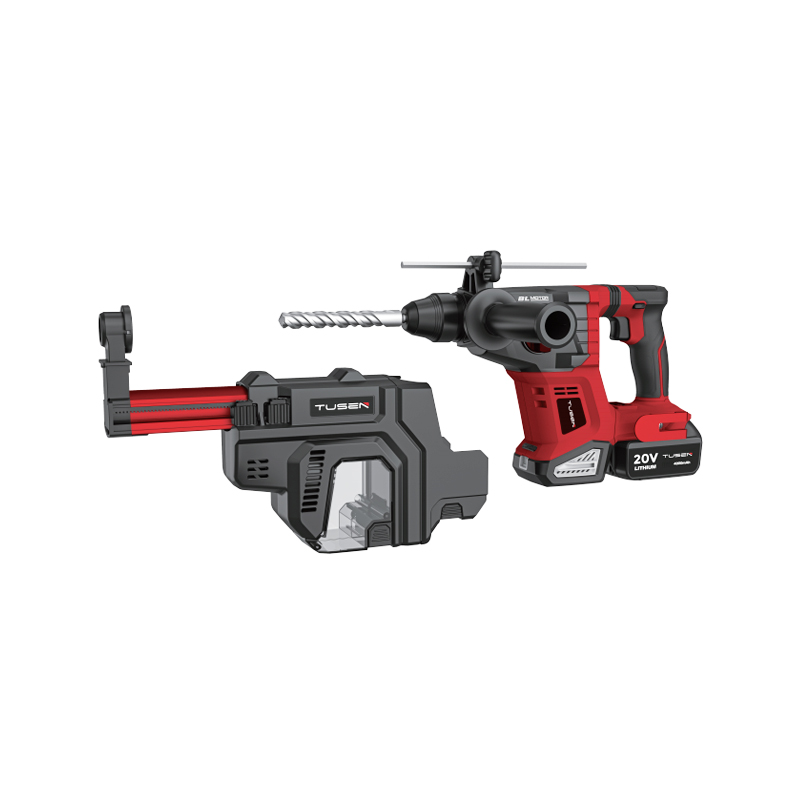
Power is drawn from a corded electric supply or a high-capacity battery pack. Corded models deliver continuous output limited only by the motor’s thermal capacity. Battery models provide comparable impact energy for the duration of the charge. Input wattage or battery voltage influences the maximum impact energy and the sustained drilling rate.
Bit diameter capacity varies with the tool class. Smaller units handle bits up to 26 mm or so; larger SDS-max machines accept bits well beyond 40 mm and can drive core bits for larger openings. Vibration levels are managed through counterbalance systems or isolated handles that reduce the transmission of impact forces to the operator’s hands.
Tooling and Application Contexts
Bits for professional rotary hammers are matched to the chuck system and the intended material. Carbide-tipped drill bits cut concrete and brick. Chisels of various shapes—flat, pointed, or scaling—fit the same chuck for light breaking work. Core bits remove circular sections when larger openings are required.
On construction sites the tool appears in tasks such as anchoring, through-drilling of walls, and preparation of openings for pipes or conduits. The combination of rotation and impact allows relatively rapid progress in reinforced concrete once the correct bit and mode are selected. The same machine can shift from drilling to light chiseling by changing the bit and mode, reducing the number of separate tools needed on a given job.