Español

Drilling into concrete is different from making holes in wood or metal. The material is dense, resistance changes during drilling, and the tool needs to deliver both rotational movement and repeated impact force. This is why rotary hammers use a dedicated mechanical structure rather than relying on a conventional drill mechanism.
For power tool manufacturers and overseas equipment buyers, a High Quality Rotary Hammer involves more than motor output. Its performance depends on how the motor, impact mechanism, transmission system, chuck, and housing work together. Understanding these components provides a clearer picture of the engineering behind professional drilling equipment.
Inside the Rotary Hammer: How Impact Force Is Generated
A rotary hammer typically uses an electro-pneumatic impact mechanism. When the motor operates, it drives a mechanical transmission system that activates a piston. The piston compresses air inside a cylinder, creating pressure that moves a striker forward. The striker then transfers impact energy to the drill bit.
This process produces repeated impacts while the drill bit rotates, allowing the tool to work on hard materials such as concrete, masonry, and stone.
The main components include:
- Electric motor: Provides the power required to drive the transmission and impact systems.
- Piston and cylinder: Generate the air pressure used in the impact mechanism.
- Striker: Transfers impact energy toward the drill bit.
- Gear assembly: Transmits motor movement and coordinates the operating mechanism.
- Chuck system: Holds the drill bit and transfers rotational and impact movement.
The arrangement and interaction of these components have a direct influence on the working characteristics of a High Quality Rotary Hammer.
Motor Output Is Only Part of the Equation
Motor power is an important specification, but it does not independently determine drilling performance. The transmission system needs to convert motor rotation into suitable mechanical movement for both drilling and impact operations.
Gear materials, gear geometry, bearing arrangements, and internal component positioning all influence how power travels through the tool.
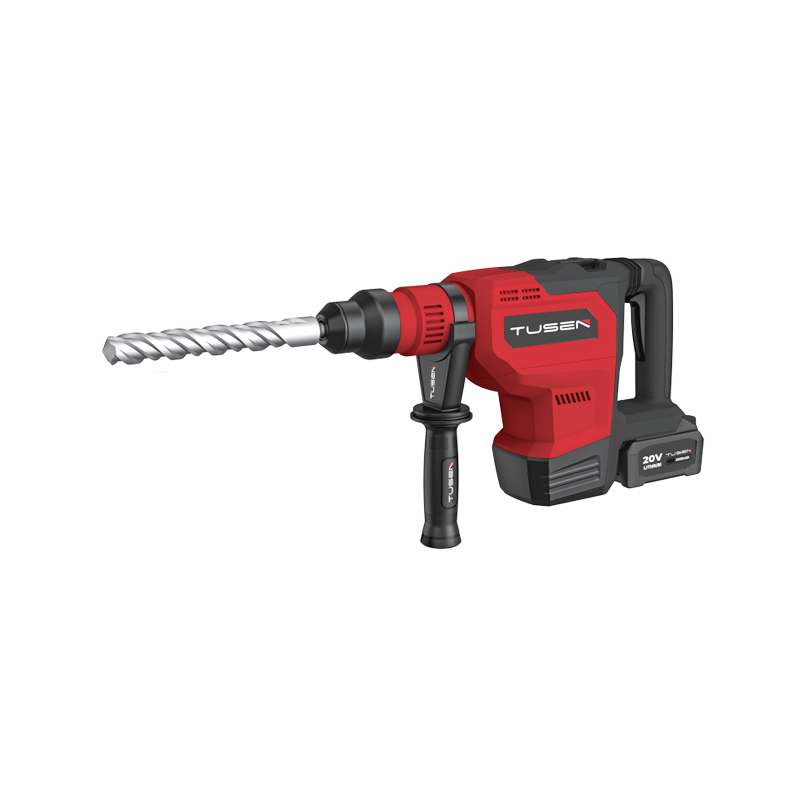
Different rotary hammer models may use different motor configurations according to their intended applications. Compact models are commonly designed for installation work and smaller drilling tasks, while larger models are intended for demanding concrete drilling and heavier construction applications.
For manufacturers, the challenge is to coordinate motor output with impact energy, rotational speed, and tool weight. A High Quality Rotary Hammer should be developed around the intended workload rather than a single specification.
Why Housing and Internal Materials Matter
The housing protects the motor and transmission system while providing the main structure for the tool. It also affects grip, weight distribution, and vibration transmission.
Power tool housings commonly use engineering plastics, including reinforced nylon and other impact-resistant polymer materials. These materials allow manufacturers to create complex shapes for handles, motor covers, and internal component supports.
Metal components are used in areas exposed to mechanical loads. Gear assemblies, shafts, cylinders, and impact-related parts require materials suited to their operating functions. The choice of metal and its manufacturing process influence strength, dimensional characteristics, and component integration.
For a High Quality Rotary Hammer, material selection needs to consider the different demands placed on each component rather than applying the same material throughout the machine.
Building a Rotary Hammer Around Its Intended Application
A High Quality Rotary Hammer is the result of coordinated mechanical and electrical design. Motor output, pneumatic impact generation, gear transmission, housing materials, and chuck configuration all contribute to the finished tool.
For power tool manufacturers and B2B buyers, understanding these relationships makes product selection and OEM development more straightforward. When the intended drilling materials, hole sizes, operating modes, and user requirements are clearly defined, manufacturers can develop a rotary hammer configuration that fits the actual application.