Español

The Electro-Pneumatic Impact Cycle
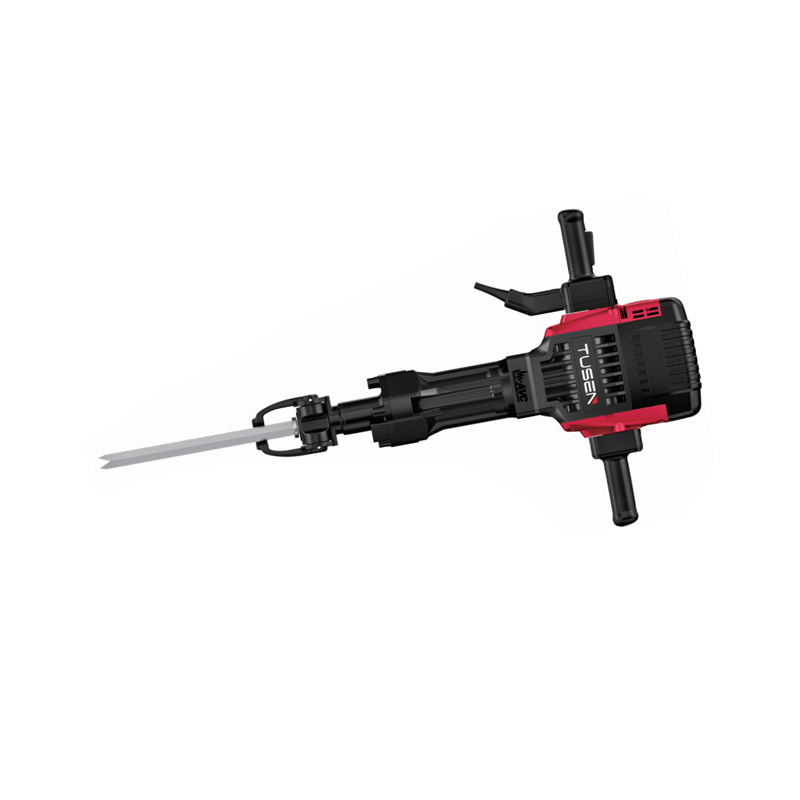
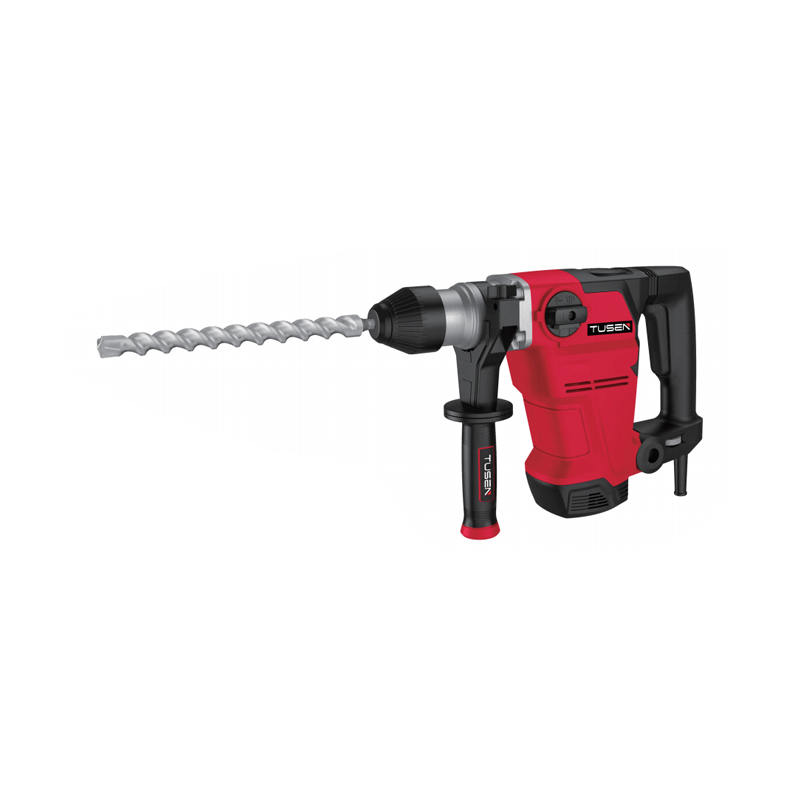
An AC Electric Hammer does not strike the bit directly. Instead, a motor-driven crank or wobble bearing pushes a piston through a cylinder, and that piston compresses air ahead of a free-moving striker. The striker accelerates and hits the bit shank, delivering the blow.
This air-spring arrangement is what separates a rotary hammer from a simple impact drill. Because the striker floats between two air cushions, it can deliver repeated blows without a rigid mechanical link, which reduces wear on the moving parts and smooths the feel in the operator's hands.
Motor Types and Torque Delivery
The motor in an AC Electric Hammer is typically a universal motor, chosen because it produces high torque from a compact frame and runs directly from mains supply without an external power brick. Winding design and cooling airflow shape how the tool behaves under sustained load.
Torque delivery matters as much as peak output. A motor that builds speed quickly helps in short, repeated drilling tasks, while a motor tuned for steady torque suits long runs through dense aggregate. The gearing between motor and piston translates that torque into the blow rate the tool delivers.
Gearbox and Blow Rate Relationships
Inside the gearbox, a AC Electric Hammer trades rotational speed for impact frequency. Lower gear ratios produce faster blow rates with less torque per blow, which suits fast drilling in softer masonry; higher ratios slow the cycle but increase the energy in each strike.
Many tools offer two or three speed settings so the operator can shift between drilling and chiseling modes. Mode selection usually engages or disengages the rotary drive, letting the same tool hammer without rotating for light chiseling work.
Chuck Systems and Bit Retention
The chuck is the interface between the AC Electric Hammer and the bit, and it has to hold under repeated shock. SDS-style shanks are common because the grooved profile locks the bit against rotation while allowing it to slide axially, which is essential for the striking action to reach the work.
Retention sleeves and ball detents keep the bit seated during vibration. Wear in the chuck shows up as bit wobble or slipping, so the interface is worth checking when a tool starts drilling oversize holes or losing impact efficiency.
Vibration and Operator Feedback
Vibration is an unavoidable byproduct of an AC Electric Hammer, and how the tool manages it shapes both comfort and control. Decoupled handles, rubber mounts, and counterweight arrangements reduce the amount of recoil that reaches the operator's hands and arms.
Feedback also matters for accuracy. A tool that transmits too little feel can make it hard to judge when the bit is biting; too much and fatigue sets in quickly. Designers tune the handle and housing to balance the two, which is why handle geometry varies across models.
A Tool Defined by Its Linkages
The AC Electric Hammer is a chain of conversions: electrical power to rotation, rotation to air pressure, air pressure to impact. Each link shapes the next, and the quality of the whole depends on how well they are matched.
Understanding that chain helps anyone specifying or operating the tool. The specifications describe the endpoints, but the linkages in between are what determine how the work actually feels.